
Getting an Enemalta meter: what your electrician certifies
A walk through ARMS Form A from the applicant's side and the electrician's side — what goes in each section, what triggers a quote instead of a fixed fee, and why a supply switched off for more than six months has to be certified again.
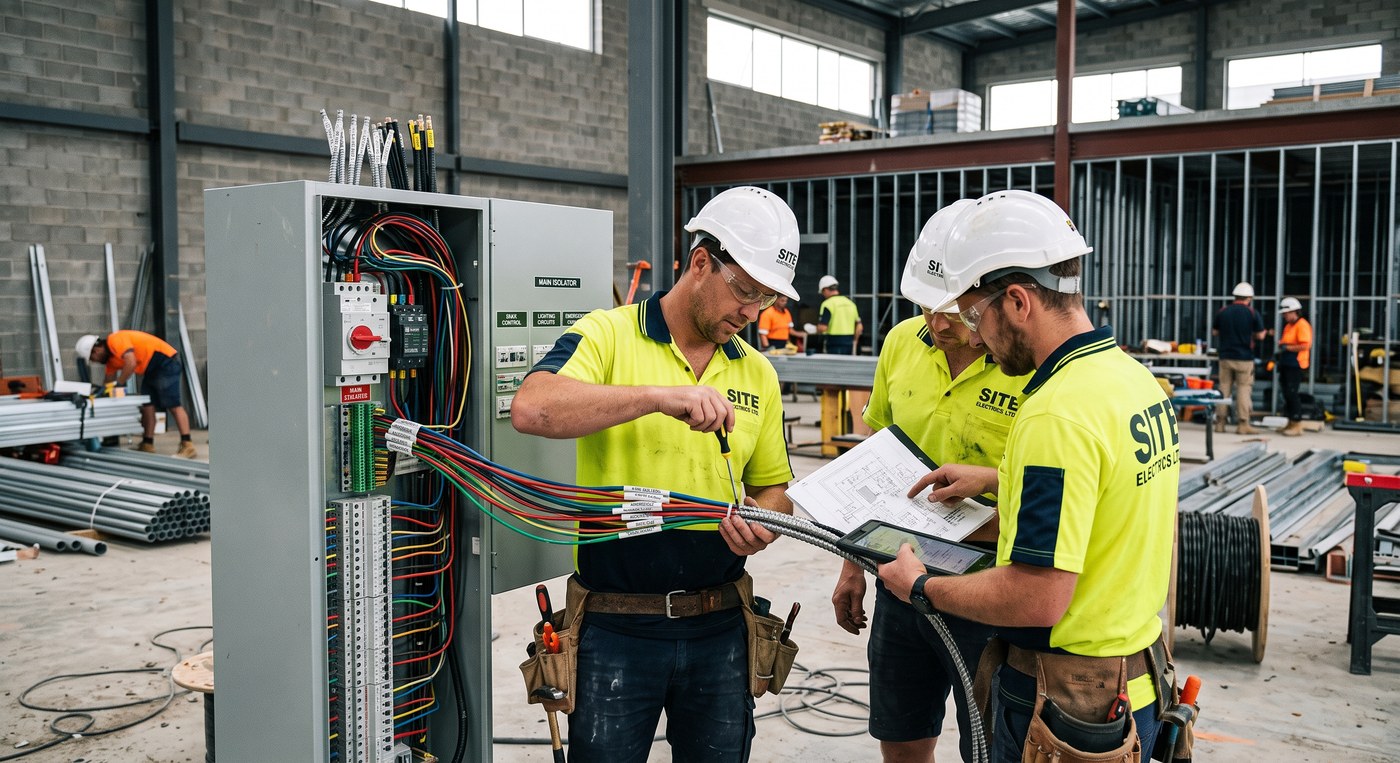
If you have bought in Malta and the property has never been connected, or has been sitting empty since the last occupant left, the meter is not an Enemalta matter you can arrange on your own. It runs through ARMS Ltd on Form A — Application for new electricity and/or water services, and one section of that form can only be completed by an authorised electrical service provider. That section is the reason electricians get involved before the paperwork goes in, not after.
This is where expectations imported from the UK come unstuck. There is no DNO application and no NICEIC certificate. The person who signs is authorised under the Maltese regulatory regime overseen by REWS, and the declaration they sign cites Maltese subsidiary legislation — S.L. 545.41 and S.L. 545.24.
What has to exist before anyone signs anything
Three things, in this order.
A planning position. Form A asks for the Planning Authority compliance certificate number. Shell form is the ordinary way property changes hands here, so a great many buyers arrive at this step with a property that is structurally complete and electrically empty. The PA number is a field on the form; there is no version of the application that skips it.
A meter position. Enemalta's guidance on becoming a customer is explicit that space must be provided for the meter near the entrance of the premises. In a townhouse this is usually straightforward. In an apartment block it is not a decision the individual owner makes alone — the meter position sits in common parts, and condominium rules bind what can be done there. Sort this out before the electrician books a certification visit rather than after.
An installation worth certifying. The provider signing Section C is declaring that what is behind the meter position complies. That means the consumer unit, the main switch, the earthing arrangement and the circuits are in place and testable. A shell with a length of twin-and-earth hanging out of a chase is not at that stage.
Section B: the fees
Form A sets out the connection charges. Enemalta's residential property services page publishes the domestic figures:
| Item | Amount |
|---|---|
| Single-phase domestic installation | €300 |
| Three-phase domestic installation | €900 |
| Service charge, single-phase | €65 |
| Service charge, three-phase | €195 |
Form A's fee section also carries a €600 band between the two. The published Enemalta residential page names only €300 and €900, so if your case falls in the middle, read the figure off the current Form A rather than off any summary — including this one. The residential page also notes that a maximum-demand tariff applies to larger residential demands, which matters if you are specifying for a pool pump, EV charging and air conditioning all at once.
Two triggers take you out of the fixed-fee schedule entirely:
- the supply point is more than 150 m from the existing network, or
- the required demand exceeds 60 A.
Either one means the job is quoted rather than charged at the standard rate. Enemalta states that a quotation is issued within 30 business days. Buyers of rural or off-the-beaten-track property in Gozo run into the 150 m trigger more often than buyers of anything in a village core, and the cost of covering that distance is not published anywhere — it depends on the route, the ground and what has to be reinstated afterwards.
Section C: what your electrician actually certifies
This is the part of Form A that cannot be delegated to the owner, the architect or the developer. In Section C, the authorised electrical service provider records the technical particulars of the installation — the switchgear, including the rating of the main protective device, and the earthing arrangement — and then signs a declaration that the installation complies with S.L. 545.41 and S.L. 545.24.
Two things follow from that.
First, the signature is personal and traceable. The provider's licence details go on the form and a copy of the licence is one of the documents listed in Section D. Whoever signs owns the declaration.
Second, the declaration is about the state of the installation at the time of signing. If the installation is altered afterwards — a second consumer unit added, the earthing reworked, circuits extended for a conversion — the certificate on file describes something that no longer exists. That is the owner's problem before it is anyone else's.
Practically, the certifying visit involves inspecting and testing the installation, recording the switchgear and earthing detail, and completing and signing Section C. It is not a formality performed remotely on the strength of a photograph.
Section D: the documents that travel with the form
Form A lists the accompanying documents. The ones that most often hold applications up are:
- the PA compliance certificate number;
- photographs of the site and meter position;
- a copy of the certifying provider's licence.
Form A does not say how many photographs, from what angles, or at what resolution. Nobody publishes that. Send more rather than fewer, and make sure the intended meter position near the entrance is legible in at least one of them.
The 21-day timeline, and when it stops applying
Enemalta gives 21 days as the standard timeframe for a new connection. Read that as the standard-case figure for an application that is complete, fee-paid and not caught by either quote trigger.
It stops being the operative number when:
- the distance exceeds 150 m or the demand exceeds 60 A, in which case the 30-business-day quotation process comes first and the connection follows acceptance;
- the application is returned for a missing document, which resets your position in the queue rather than pausing it.
Nothing published states precisely when the 21 days begins to run. If you are coordinating a completion date or a tenancy start around it, treat it as a planning figure and not a guarantee.
Accounts suspended for more than six months
This catches inherited property, long-empty apartments and anything bought from an estate. Enemalta's tariffs, billing and payments page states that where an account has been suspended for more than six months, the installation must be re-certified before supply resumes.
Re-certification means an authorised provider inspects the installation in its current condition and certifies it again. An installation that was compliant in 2014 is being assessed against the requirements that apply now, in the condition six damp winters have left it. Expect the inspection to find things — that is what it is for. Budget time for remedial work between the inspection and the certificate, because the certificate follows the remedial work rather than preceding it.
If you are arriving from the UK or elsewhere in the EU
Three differences are worth internalising:
- The certifier is REWS-authorised, not NICEIC-registered. A UK qualification does not, by itself, entitle anyone to sign Section C.
- The application is to ARMS, not to a network operator. Form A covers electricity and water together; ARMS is the billing and application counterparty, Enemalta does the connection.
- The fee is a published schedule, not a negotiated connection charge — unless you cross 150 m or 60 A, at which point it becomes a quotation like any other.
If you are in Gozo, add delivery logistics to your own planning. Materials and personnel cross on the ferry, and no published timeline accounts for that.
Common questions
- Can I apply for an Enemalta meter myself, or does an electrician have to do it?
- You complete the applicant sections of ARMS Form A yourself, but Section C can only be filled in and signed by an authorised electrical service provider. That person records the switchgear and earthing arrangement and declares the installation complies with S.L. 545.41 and S.L. 545.24, and a copy of their licence goes in with the form. Without that section the application is incomplete.
- How long does a new connection take?
- Enemalta gives 21 days as the standard timeframe for a new connection once the application is in order. Where the job needs a quotation rather than the standard fee — for example a supply more than 150 m from the existing network, or a demand above 60 A — Enemalta states the quotation is issued within 30 business days, and the connection work follows acceptance and payment of that quotation.
- My flat has been empty for two years and the account is suspended. Can I just reconnect it?
- No. Enemalta's tariffs and billing page states that where an account has been suspended for more than six months, the installation has to be re-certified before supply resumes. In practice that means an authorised electrical service provider inspects the installation as it stands and certifies it again — not a phone call to reopen the account.
- Why do I need photographs with the application?
- Section D of Form A lists photographs among the documents that must accompany the application, alongside the planning compliance certificate number and a copy of the certifying provider's licence. They evidence the site and the intended meter position. Form A does not specify how many photographs or what each must show.
What we could not establish
- Enemalta's residential page names €300 and €900 for installation; Form A's fee section also carries a €600 band, but the published pages do not make plain which supply type or capacity attracts the middle figure.
- The €65 and €195 service charges are published as amounts without a stated billing period on the residential services page.
- Nothing published states whether the 21-day clock starts at submission, at acceptance of a complete application, or at payment.
- Form A does not specify the number, format or required content of the photographs in Section D.
- No published figure exists for what re-certification of a long-suspended installation costs, or whether a fresh Form A is required for it.
- Neither Enemalta nor ARMS publishes a separate timeline for Gozo, so the effect of ferry logistics on the 21 days is not documented.
- Condominium consent for a meter position in a common area is not addressed anywhere in these sources.
- The cost of trenching or cabling beyond 150 m is quoted case by case and no indicative rate is published.
Sources
- Form A - Application for new electricity and/or water services — ARMS Ltd · read 2026-09-21
- Becoming an Enemalta customer — Enemalta plc · read 2026-09-21
- Residential property services — Enemalta plc · read 2026-09-21
- Tariffs, billing and payments — Enemalta plc · read 2026-09-21
Want this costed properly?
The calculator gives you a figure in a minute. A site visit gives you a fixed price.
Book a free survey