
Installing an EV charger at home in Malta
Fitting a home charger in Malta is two separate jobs: a dedicated final circuit installed by a REWS-authorised electrician, and an optional Enemalta EV meter that unlocks the off-peak EV rate. Neither one is grant-funded in 2026.
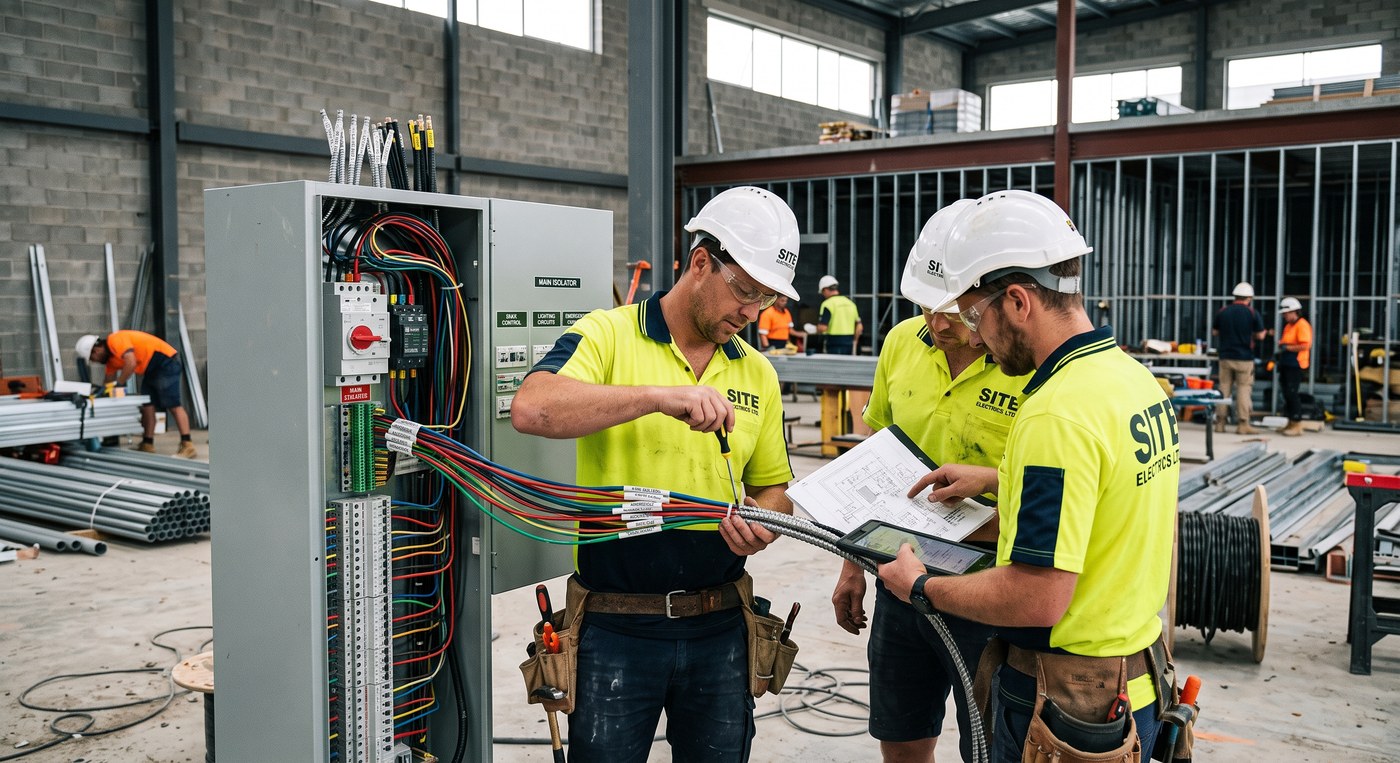
Fitting a charger at home in Malta is not one job. It is two, run by two different organisations, with two different sets of rules, and only one of them is compulsory.
The first half is electrical: a dedicated final circuit, installed and certified by a REWS-authorised electrician. The second half is metering: an optional separate EV meter from Enemalta, which exists so that your charging is billed apart from the rest of the house and can take the off-peak EV rate. You can do the first without the second. You cannot do the second without the first.
If you have arrived from the UK, reset two assumptions before you start. The competent-person scheme here is REWS authorisation, not NICEIC or NAPIT. And there is no DNO to apply to: the distribution network, the meter and the tariff are all Enemalta.
Half one: the circuit
REWS's Electrical Installations Regulations Updates booklet (November 2025) sets out what an EV charging point needs. The core requirements:
- A dedicated final circuit. The charger gets its own way out of the distribution board. It does not share with the garage lights, the water heater or a socket ring.
- One charger per circuit. Two cars means two circuits, not one circuit split.
- Protection against DC residual current. Either a Type B RCD, or a Type A or Type F RCD combined with a residual direct current detecting device (RDC-DD). This is the requirement most often missed on retrofits, because a plain Type AC RCD — still common in older Maltese boards — will not do.
- 13 A sockets used for EV charging must be marked for EV use. If the plan is to trickle-charge from a socket in the garage rather than fit a wallbox, that socket is not an ordinary socket and cannot be treated as one.
Enemalta's own sheet, Technical Requirements prior to installation of EV meter (ENE/DZ/381), adds the consumer-side items it expects to see: an MCB, an RCD and overvoltage protection, and it works in terms of 6 mm² and 10 mm² cable. Which of those two cable sizes applies depends on the supply and the load, and it is the electrician's job to read that sheet against your actual installation rather than default to the larger cable.
In a shell-form property this is straightforward, because the walls are still open and the run from the board to the garage wall is a chase like any other. In a finished house or a flat it is usually the cable route, not the charger, that sets the price.
The 40 A ceiling, and when you need three phases
This is the constraint that catches people out. A typical Maltese domestic supply is single-phase, and Enemalta's EV meter installation requirements treat 40 A as the threshold: beyond that, the installation needs a three-phase supply.
That has direct consequences for hardware choice. A 22 kW charger is a three-phase unit. On a single-phase 40 A service it is not usable at its rated output, and the honest options are to specify a single-phase charger, current-limit the unit, or apply for a three-phase supply — which is a separate Enemalta process with its own cost and civil works, and may not be practical in a terraced street or an apartment block.
It also matters that the 40 A is shared with everything else in the house. A 7.4 kW single-phase charger draws around 32 A on its own. Run that while the oven, the air conditioning and the water heater are on and you are at the limit of the service, not just the circuit. Load management — either a charger that can throttle itself or an electrician-configured limit — is usually the cheaper answer than a supply upgrade.
Half two: the Enemalta EV meter
The EV meter is a second, separate meter that measures only the charger. Its purpose is tariff: Enemalta's EV charging electricity tariff gives an off-peak rate of €0.1298 per unit during the hours it publishes on that page. Check those hours. Do not assume they match a UK Economy 7 window, and do not set the car's charging timer until you have read them.
Enemalta charges €50 or €80 for the EV meter. Two practical requirements follow from its installation requirements page:
- You need a clear space of 30 × 20 × 20 cm beside the existing main meter for the EV meter to go. In older Maltese properties the meter cupboard is often already full — a recess in a wall with the main meter, the ARMS seal and not much else. If the space is not there, it has to be made before the application goes anywhere.
- Above 40 A, three-phase applies, as above.
Whether the meter is worth €50 or €80 depends entirely on how many units you will push through it and what you currently pay per unit on your domestic tariff. A household charging a few times a month may never recover the difference; one charging nightly will.
Hardware prices from Maltese sellers
These are published prices from sellers in Malta, for the unit only. None of them includes the circuit, the cable run, the board work or the certification.
| Charger | Seller | Output | Price |
|---|---|---|---|
| Wallbox Pulsar Plus | ctCharge | 7.4 kW / 22 kW | €699 |
| Smart charging station | Würth Malta | 7.4 kW | €990 inc. VAT |
| Smart charging station | Würth Malta | 11 kW | €1,090 inc. VAT |
The 22 kW and 11 kW variants are three-phase units and only make sense with a three-phase supply. For most Maltese homes on single-phase, the 7.4 kW option is the relevant one.
If you are in Gozo, buying from a Malta-based seller means the unit crosses on the ferry. Neither seller publishes Gozo delivery terms, so ask before ordering rather than after.
There is no home-charger grant in 2026
The grants announced for 2026 are vehicle grants, alongside a scrappage scheme. There is no grant towards a domestic charging point.
The "€900 charger grant" that circulates in expat groups and on forums is a misremembering. The €900 figure belongs to a 2021 scheme and applied to photovoltaic panels fitted to commercial vehicles — not to home wallboxes, not to domestic installations, and not to the circuit work. Budget the charger, the circuit and the meter as unsubsidised costs.
Order of operations
- Establish what your supply actually is: single-phase or three-phase, and what the main fuse rating is. Everything else follows from this.
- Check whether there is 30 × 20 × 20 cm free beside the main meter, if you want the EV meter.
- If you are in a block, deal with the condominium before anything else. The cable run and the charger position will both be common-property questions.
- Choose hardware that matches the supply, not the car's maximum.
- Have the dedicated circuit installed and certified by a REWS-authorised electrician, to the RCD/RDC-DD requirement.
- Apply to Enemalta for the EV meter if the off-peak rate makes sense for your usage.
Doing steps 4 and 5 before step 1 is how people end up with a 22 kW wallbox on a 40 A single-phase service and a bill for a supply upgrade they did not budget for.
Common questions
- Do I need an Enemalta EV meter to charge at home?
- No. The EV meter is optional. The compulsory half of the job is the dedicated final circuit installed by a REWS-authorised electrician. The EV meter exists so that charging is billed separately, which is what gives access to Enemalta's off-peak EV rate of €0.1298 per unit. Enemalta charges €50 or €80 for the meter itself.
- Is there a €900 grant for a home charger in Malta in 2026?
- No. The grants announced for 2026 are vehicle grants and a scrappage scheme; there is no home-charger grant. The €900 figure circulating online comes from a 2021 scheme for photovoltaic panels fitted to commercial vehicles, not for domestic wallboxes.
- Can I install a 22 kW charger on a normal Maltese house supply?
- Not on a standard single-phase supply. Enemalta treats 40 A as the threshold: above that the installation needs a three-phase supply. A 22 kW charger is a three-phase unit, so on a single-phase 40 A service it would either have to be current-limited to a single-phase output or the supply upgraded.
- Can I just plug the car into an ordinary 13 A socket?
- Only into a socket that is marked for EV use. REWS's regulation updates require 13 A sockets used for EV charging to be marked as such, and the dedicated-circuit and RCD rules still apply. A random socket on a shared ring serving the rest of the house is not compliant.
- What protection does the charger circuit need?
- A dedicated final circuit, one charger per circuit, and protection against DC residual current: either a Type B RCD, or a Type A or Type F RCD combined with a residual direct current detecting device (RDC-DD). Enemalta's technical requirements sheet additionally covers the consumer-side MCB, RCD and overvoltage protection.
What we could not establish
- Enemalta publishes two EV meter charges, €50 and €80, but the material relied on here does not make clear which case attracts which figure — confirm with Enemalta before budgeting.
- The exact off-peak hours are set out on Enemalta's EV tariff page and are not reproduced here; do not assume the window matches a UK Economy 7 pattern.
- No published lead time for an EV meter application from submission to energisation.
- No published typical installed cost for the electrician's side of the work in Malta — hardware prices are public, labour and materials are not.
- Nothing in these sources addresses condominium consent for a charger in a block, or metering for chargers in common garages.
- Whether chargers installed before the current REWS regulation updates must be retrofitted with an RDC-DD is not stated.
- Whether the ctCharge €699 price includes VAT is not stated on the product page; the Würth prices are given inclusive of VAT.
- Neither seller publishes delivery terms or surcharges for Gozo.
Sources
- Electrical Installations Regulations Updates (booklet, Nov 2025) — REWS · read 2026-09-21
- Electric Vehicle Charging Electricity Tariffs — Enemalta plc · read 2026-09-21
- Installation requirements (EV meter) — Enemalta plc · read 2026-09-21
- Technical Requirements prior to installation of EV meter (ENE/DZ/381) — Enemalta plc · read 2026-09-21
- Wallbox Pulsar Plus — ctCharge (Malta) · read 2026-09-21
- Smart Charging Stations 7kW/11kW/22kW — Würth Malta · read 2026-09-21
- Government unveils electric vehicle grants and scrappage scheme — The Malta Independent · read 2026-09-21
- Malta increases electric vehicle grants (2021) — Electrive · read 2026-09-21
Want this costed properly?
The calculator gives you a figure in a minute. A site visit gives you a fixed price.
Book a free survey