
Three-phase or single-phase for a Maltese villa?
Larger homes in Malta and Gozo sooner or later run into the limits of a single-phase supply. Here is what the published rules and charges actually say about going three-phase — and the EV-charger rule that forces a main-meter change.
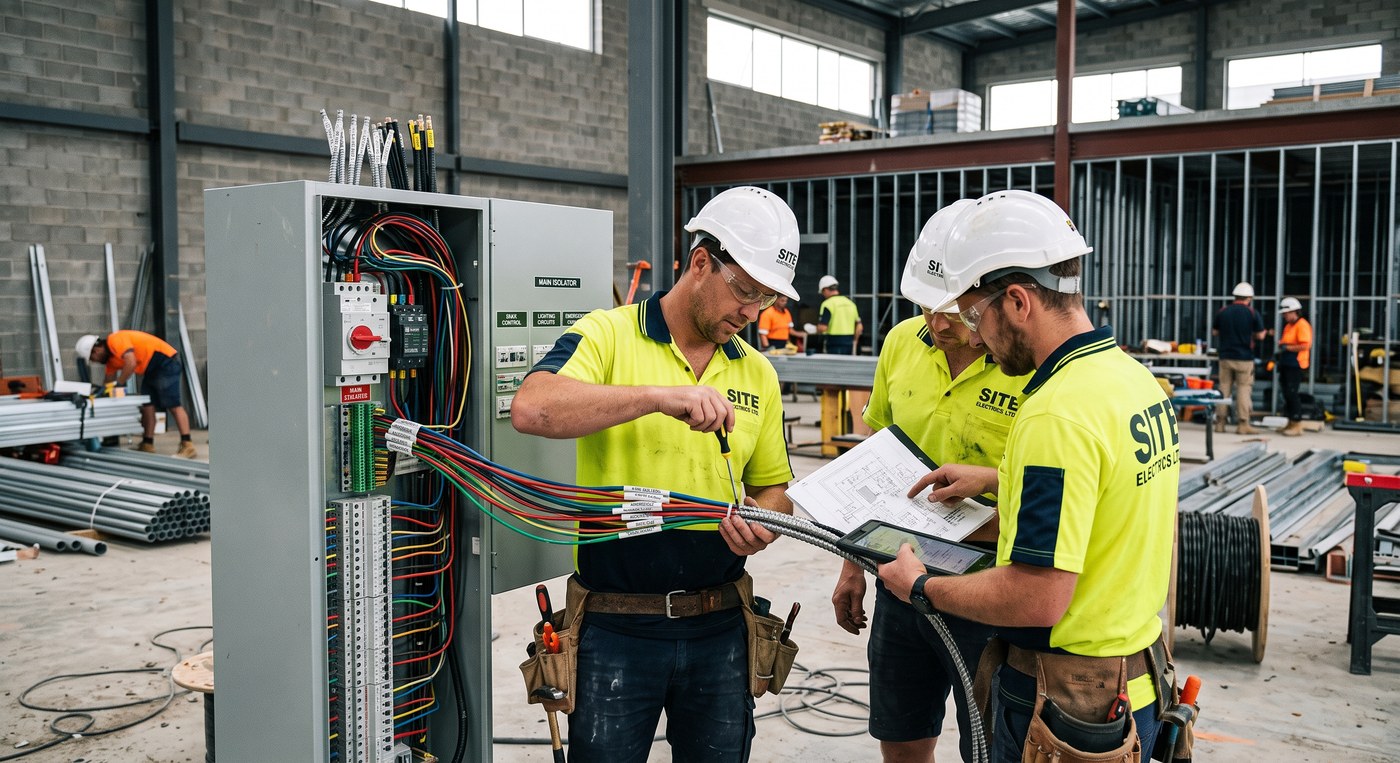
If you have bought or are buying a larger house in Malta or Gozo — a villa, a converted farmhouse, a townhouse with a pool and a full-height lift — the phase question arrives early and awkwardly. It usually arrives at shell stage, when the walls are up, nothing is chased yet, and someone asks where the meter board is going.
Get it wrong and you do not simply add capacity later. You re-route an intake, re-do a meter position, and re-apply.
The baseline, and why British expectations mislead
In Malta the ordinary domestic service is single-phase, and 40 A is the figure most homes are built around. Arrivals from the UK tend to assume something close to 100 A single-phase and an electrician who can specify almost anything within it. That assumption is the root of most of the trouble. A 40 A single-phase service is a genuinely modest ceiling once you start adding air conditioning, heat-pump water heating, an induction hob and a car.
Two other expectations need resetting. The connection application is made to ARMS Ltd on Form A, not to a distribution network operator. And the competence regime is Maltese: electricians hold an authorisation under S.L. 545.24, administered through REWS. NICEIC, NAPIT and ECA registrations mean nothing in a Maltese certification.
What changed in October 2024
Amendments to the electricity supply and electrical installation regulations came into effect on 29 October 2024. Two things in them matter to villa owners.
First, a 40 A three-phase residential service now exists as an option. Previously the step up to three phases was a bigger jump; the 40 A three-phase service gives households a lower rung on the ladder — three phases for balancing and for motor loads, without going straight to 60 A.
Second, the demand calculation used when assessing a connection is now EV-aware. Charging load is no longer something you quietly add afterwards and hope nobody notices; it is part of the assessment.
What pushes a villa past single-phase
Four things, in rough order of how often they decide it:
- Motors above 1.5 kW. This is not a judgement call. Regulation 23 of S.L. 545.24 requires motors rated above 1.5 kW to be three-phase. Pool circulation pumps, borehole pumps, lift motors, larger workshop equipment. If the motor you want is above the threshold, the phase decision has already been made for you.
- Multi-split air conditioning. A villa with six or eight indoor units on two or three outdoor condensers presents a large simultaneous summer load, and Maltese summers mean simultaneous is the normal case, not the worst case.
- EV charging. Covered in its own section below, because the rule is specific.
- Everything at once. No single item breaks a 40 A single-phase supply; the aggregate on an August evening does.
Three-phase is also worth considering purely for load balancing in a large house, even where no individual item compels it. Spreading air conditioning, pool plant and kitchen across three phases behaves better than stacking it all on one.
The published charges
ARMS Form A sets out the amperage options and their charges:
| Service | Charge |
|---|---|
| Three-phase 40 A | €600 |
| Three-phase 60 A | €900 |
| Above 60 A | By quote |
Separately, Enemalta's residential property services page lists a three-phase service charge of €195.
Those are the published numbers and they should be reproduced exactly when you are budgeting. What Form A does not do is itemise what the €600 or €900 buys — trench length from the street, reinstatement of your driveway, the meter enclosure itself. If your intake position is a long way from the network, ask before you assume.
Above 60 A is a different animal
Going beyond 60 A is not simply a larger number on the same form. It changes three things at once:
- The connection charge is by quote rather than published.
- Enemalta applies a maximum-demand tariff of €21.05/kW to supplies above 60 A. This is a demand-based charge, not a consumption charge — you are billed on the capacity you draw, not only the units.
- S.L. 545.24 treats an intake above 60 A as a distinct regulatory category under regulation 21.
The practical consequence is that the honest sizing exercise is not "what is the largest supply I might ever want". It is "what is the smallest supply that comfortably carries my actual load list", because crossing 60 A moves you onto a different commercial footing permanently. A villa that would sit at 55 A with sensible diversity is in a materially better position than one specified at 70 A because somebody rounded up.
The EV-meter trap
This is the point most often missed, and it is the one that costs people money after the fact.
Enemalta's EV meter installation requirements state that where demand exceeds 40 A during charging, you must apply for a three-phase supply — and the main meter must be changed as well. The EV meter is not an independent addition sitting quietly alongside your existing arrangement. Triggering it triggers work on the main service.
So if there is any prospect of a car in the next few years, price the EV charger into the phase decision now, while the house is at shell stage and the intake route is still a line on a drawing. Doing it in the right order costs one application and one set of builder's work. Doing it in the wrong order costs two of each, plus re-opening finished surfaces.
Only Authorisation B can certify three-phase
Regulation 5 of S.L. 545.24 distinguishes between authorisation classes, and three-phase installation work falls to Authorisation B. An Authorisation A holder cannot certify it.
This matters in practice because plenty of competent people work on Maltese villas, and the person who wired your sockets may not be the person who can sign off a three-phase intake. Before you commit to a three-phase design, confirm who is certifying it and on what authorisation. Ask to see it. A completed installation that cannot be certified is not a finished installation.
Shell form, Gozo, and timing
Maltese property is normally sold in shell form, which is the one genuine advantage in all of this: the decision lands at the moment when chasing, conduit and meter position are all still open. The expensive version of this article is the one you read after the plaster is on.
For Gozo, every component crosses on the ferry. A three-phase meter board, larger tails and three-phase distribution gear are not items your electrician has in the van. Order lead times and ferry logistics both add to the calendar, and neither the ARMS nor the Enemalta material published here gives an official timescale from application to energisation — so build slack into the programme rather than into the budget.
How to decide
Write down every fixed load the finished house will carry: air conditioning outdoor units, water heating, pool plant, lift, hob, and a charger if there is any chance of one. Check each motor against the 1.5 kW line in regulation 23. Then have an Authorisation B holder assess the total against a 40 A single-phase service.
If it fits, stay single-phase. If it does not, the 40 A three-phase service introduced in October 2024 is the natural next step at €600, with 60 A at €900 above it. Treat 60 A as the ceiling worth staying under unless the load genuinely demands otherwise, because above it the maximum-demand tariff of €21.05/kW follows you for the life of the supply.
Common questions
- Does a pool pump have to be three-phase?
- If the motor is rated above 1.5 kW, yes. Regulation 23 of S.L. 545.24 requires motors above 1.5 kW to be three-phase, which covers pool pumps, borehole pumps, lift motors and larger workshop machinery. Below that threshold the regulation does not force the issue, and the decision comes down to total demand rather than the individual motor.
- What does it cost to bring three-phase to a house?
- ARMS Form A publishes €600 for a three-phase 40 A service and €900 for three-phase 60 A. Anything above 60 A is by quote. Separately, Enemalta lists a three-phase service charge of €195 under its residential property services. Form A does not break down what civil works, trenching or cable length those figures include, so ask before you budget.
- My electrician wired the whole house. Can he certify the three-phase supply?
- Only if he holds Authorisation B. Regulation 5 of S.L. 545.24 reserves three-phase installation work and certification to Authorisation B holders; Authorisation A does not extend to it. Authorisation is issued under the Maltese regime through REWS — a UK NICEIC or NAPIT registration carries no weight here.
- I only want an EV charger. Will that leave my main meter alone?
- No. Enemalta's EV meter installation requirements state that where demand exceeds 40 A during charging you must apply for a three-phase supply, and that the main meter has to be changed as well. An EV meter is not a bolt-on beside an untouched existing installation.
What we could not establish
- None of the sources states a single-phase connection charge, or confirms in writing that 40 A single-phase is the mandated default domestic service — it is simply the common baseline in practice.
- Enemalta lists the €195 three-phase service charge and the €21.05/kW maximum-demand rate without the sources here establishing whether either is billed monthly, annually or once.
- Form A does not say what the €600 and €900 figures include: trenching, cable run length from the street, reinstatement and meter-board works are not itemised.
- No source published here gives a timescale between submitting Form A and energisation, nor any Gozo-specific variation.
- The sources do not publish the calculation method Enemalta uses to assess maximum demand, so there is no official way to check in advance whether your load list will be accepted at 40 A.
- Regulation 21 of S.L. 545.24 treats intakes above 60 A as a separate case, but the detailed technical requirements for such intakes are not summarised in the material used here.
- Whether converting an existing single-phase supply is priced the same as a new three-phase connection is not stated.
Sources
- Form A - Application for new electricity and/or water services — ARMS Ltd · read 2026-09-21
- Residential property services — Enemalta plc · read 2026-09-21
- Amendments to regulations ... come into effect (29 Oct 2024) — The Malta Independent · read 2026-09-21
- S.L. 545.24 Electrical Installations Regulations — Laws of Malta · read 2026-09-21
- Installation requirements (EV meter) — Enemalta plc · read 2026-09-21
Want this costed properly?
The calculator gives you a figure in a minute. A site visit gives you a fixed price.
Book a free survey