
Licence A vs B: who can legally wire your home in Malta
Malta authorises electricians under S.L. 545.24, not under any UK scheme. Class A covers single phase; class B adds three phase up to 300 A per phase. Only an authorised provider can certify the work — and a handyman cannot certify anything at all.
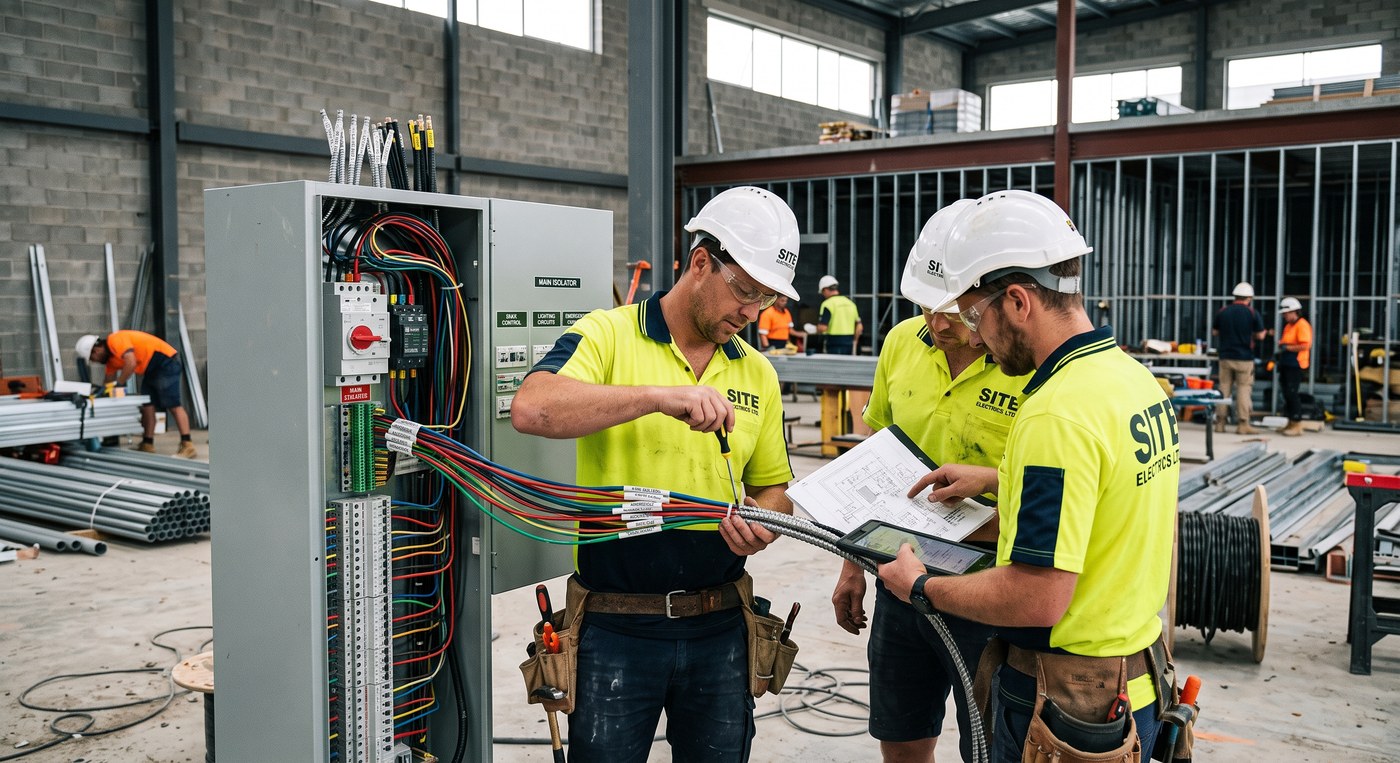
If you have arrived from the UK, the mental model you brought with you is wrong in one specific way. There, competence is evidenced by membership of a scheme — NICEIC, NAPIT, and so on — and the scheme is a private body. In Malta, the authorisation is statutory. It comes from the Regulator for Energy and Water Services (REWS) under S.L. 545.24, the Electrical Installations Regulations, and it comes in classes. An electrician either holds the class that covers your installation or they do not.
Two classes, one distinction
Regulation 5 of S.L. 545.24 sets out the classes of authorisation. The practical difference between them is the supply:
| Class | What it covers |
|---|---|
| A | Single-phase installations |
| B | Single-phase installations, and three-phase installations up to 300 A per phase |
That is the whole of it. Class B is not "better wiring" and class A is not a trainee grade — they are scope limits tied to the supply the installation draws. Most domestic work turns on which one you have, so establish that before you book anyone. If the intake and the main switch are single phase, an A-authorised electrician's scope covers the job. If the property is three phase, you need B.
People use the word licence in conversation. The regulations and REWS use authorisation, and the person holding it is an authorised provider. If you are searching or asking around, both words will get you to the same place.
How someone becomes authorised
REWS publishes the route on its application page. It requires an examination and a period of documented practical experience — the page states 12 months and 24 months — and lists application fees of €12, €35 and €70.
What the published page does not do, at least not in a way we can reproduce honestly here, is tell you which of those fees and which of those experience periods attaches to class A and which to class B. If that distinction matters to you — say you are assessing whether a contractor's stated grade is plausible — ask REWS directly rather than infer it from the fee.
The relevant point for a homeowner is simpler: authorisation is examined and time-served, and it is granted by the regulator, not bought as a membership.
Only an authorised provider can certify
Regulation 12 of S.L. 545.24 deals with certification of electrical installations. This is the load-bearing rule in the whole framework. Work can be carried out by many hands; the certificate can be signed by very few. If the person who did the work cannot certify it, you do not have a certified installation — you have a bill.
Regulation 14 requires a completion form. Regulation 25 provides for an identification card, which is worth knowing about because it is the thing you can ask to see on the doorstep before anyone opens your distribution board. Regulation 26 provides for a public register of authorised persons, which is what makes the check below possible.
Checking the list before you commit
REWS publishes Electrical Installations Authorised Providers on its website. The page sets out three categories of provider and offers downloadable lists — including a list of authorised electricians, dated 6 August 2026 when we read it, and a separate list of warranted engineers.
Do this before the first invoice, not after the first problem:
- Get the electrician's full name as it would appear on an official document, not the trading name on the van.
- Download the current list from the REWS authorised providers page.
- Search for the name and note the class recorded against it.
- Compare that class to your supply — A for single phase, B if three phase.
- On the day, ask to see the identification card issued under regulation 25.
A company name on a website is not an authorisation. Authorisations attach to people. A firm may employ several authorised electricians, apprentices and labourers; the question is always which named authorised provider is putting their name to your certificate.
What you should end up holding
Two documents, kept together with the deed and the condominium papers:
- The completion form required by regulation 14, signed by the authorised provider who certifies the installation under regulation 12. Not a handwritten receipt, not a WhatsApp message saying it passed.
- A wiring schematic of the installation as built — what circuits exist, what protects them, what they feed.
The schematic is the document you will be grateful for in five years, when you are adding an air conditioner, selling the flat, or trying to explain to a buyer's electrician why there is a spur behind the kitchen units. Ask for it in the quotation stage, so it is a deliverable rather than a favour. Note that the sources here do not prescribe a format for it — there is no published template we can point you at — so agree what you expect to receive before work starts.
Where the handyman line falls
This matters more in Malta than most arrivals expect, because handyman services are widely advertised and the boundary is rarely spelled out in the advert.
A handyman can swap a fitting — replace a light fitting or a socket faceplate on a circuit that already exists and already works. That is the limit. New circuits and rewiring require a licensed electrician. And certification is narrower still: only an authorised provider certifies, under regulation 12.
So the failure mode is not usually a handyman electrocuting someone. It is a handyman doing competent-looking work that nobody can certify, on a property you later try to sell or let, leaving you to pay an authorised electrician to inspect, remediate and only then certify what should have been done once.
Shell form and the timing of all this
Property here is commonly sold in shell form, which means the first electrical installation in your new home is yours to commission, not something you inherit. That is an advantage: you choose the authorised provider, you specify the schematic as a deliverable, and the certification lines up with the finishing works rather than being retro-fitted to somebody else's decisions.
Check the class against the supply, check the name against the REWS list, and get the regulation 14 form and the schematic before the final payment leaves your account. Everything else — condominium consent for works in the common parts, the supply application, the ferry timetable if the property is in Gozo — is a separate problem, and one these regulations do not answer.
Common questions
- Can a handyman add a socket or a new lighting circuit?
- No. A handyman's electrical work is limited to swapping fittings — replacing a light fitting or a socket faceplate on an existing circuit. New circuits and rewiring require a licensed electrician, and only an electrician authorised by REWS under S.L. 545.24 can certify the result.
- My electrician is NICEIC-registered in the UK. Is that enough in Malta?
- Not by itself. Authorisation to certify an electrical installation in Malta comes from REWS under S.L. 545.24, and regulation 26 provides for a public register of those authorised. If the person's name is not on the REWS list of authorised providers, they are not an authorised provider here, whatever they hold elsewhere.
- Do I need a class B electrician for a normal flat?
- Only if the installation is three phase. Class A covers single-phase installations; class B covers single phase and three phase up to 300 A per phase. Check the supply before booking — if your board is fed single phase, an A-authorised electrician's scope covers the work.
- What paperwork should I have at the end of the job?
- A completion form as required by regulation 14 of S.L. 545.24, signed by the authorised provider who certifies the installation under regulation 12, together with the wiring schematic for the installation. You can also ask to see the identification card issued under regulation 25.
What we could not establish
- The REWS application page lists fees of €12, €35 and €70 and experience requirements of 12 and 24 months, but the sources consulted do not say which fee or which experience period attaches to class A versus class B.
- The REWS authorised providers page sets out three categories of provider; the sources consulted identify downloadable lists for authorised electricians and warranted engineers, but do not name the third category.
- Who may certify an installation drawing more than 300 A per phase is not established by these sources.
- The sources do not reproduce the field-by-field content of the regulation 14 completion form, nor any prescribed format, scale or symbol set for the wiring schematic.
- Nothing in these sources covers the supply or meter application to the distributor, or how long it takes — that is a separate process from authorisation and certification.
- No source here gives prices for electrical work, for certification, or for a periodic inspection.
- Condominium consent for works in apartment blocks, and the logistics of working in Gozo, are not addressed by any of these sources.
- How often the published REWS lists are refreshed is not stated; the electricians' list available when these sources were read was dated 6 August 2026.
- Penalties for carrying out or occupying an installation without certification are not detailed in the material consulted.
Sources
- S.L. 545.24 Electrical Installations Regulations — Laws of Malta · read 2026-09-21
- Application to Become an Authorised Electrician — REWS · read 2026-09-21
- Electrical Installations Authorised Providers — REWS · read 2026-09-21
- Handyman Services Malta: 2026 Hiring Guide — Rozie.app · read 2026-09-21
Want this costed properly?
The calculator gives you a figure in a minute. A site visit gives you a fixed price.
Book a free survey