
Why Maltese homes need an over-voltage relay
Maltese law puts an overvoltage protective device between the main switch and the 30 mA RCD. Here is what the regulation says, what changed in October 2024 for apartments, and what an Enemalta damage claim can and cannot get you.
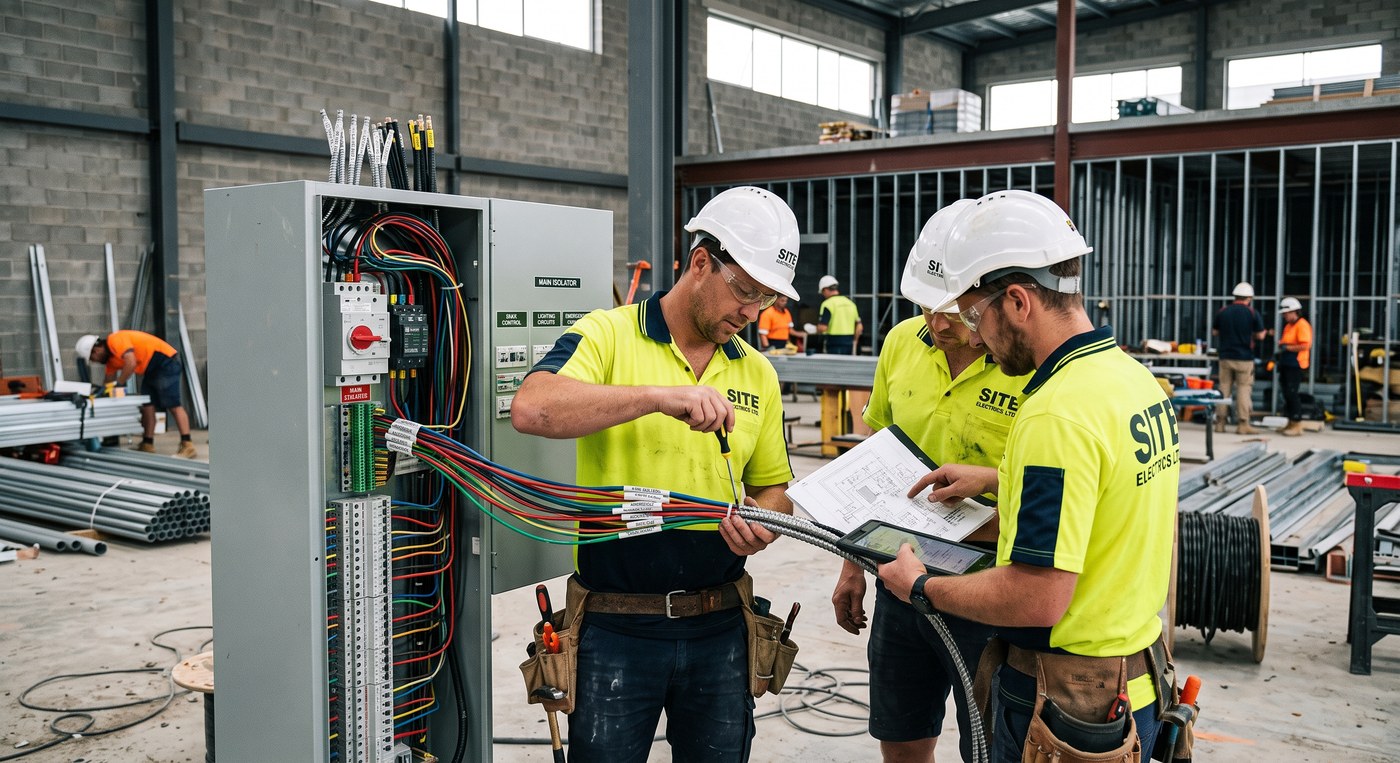
If you have bought or are renting in Malta or Gozo and have opened the consumer unit, you may have noticed a module that does not exist in a typical British board: a small relay, usually with a digital voltage display, sitting between the main switch and everything else. That is the overvoltage protective device. It is not an optional extra and it is not the same conversation as the surge protection device debate you may have followed at home. Maltese law puts it in a specific place in a specific order.
What the regulation actually says
S.L. 545.24, the Electrical Installations Regulations, deals separately with smaller and larger supplies.
For installations up to 60 A per phase — which covers the ordinary single-phase 40 A domestic supply most flats and townhouses run on — regulation 20 sets out a sequence:
| Order | Device | Regulation |
|---|---|---|
| 1 | Mechanically linked main double-pole (or four-pole) switch fuse or circuit breaker, immediately after the meter | reg. 20(1)–(4) |
| 2 | Overvoltage protective device | reg. 20(1)–(4) |
| 3 | RCD of not more than 30 mA | reg. 20(5) |
For installations over 60 A per phase, regulation 21(2) requires an overvoltage protective device at the intake.
Enemalta's own electricity safety page says the same thing in plainer language: every grid-connected property, single or three phase, must have a double-pole main circuit breaker, an overvoltage protective device, an RCD and a reliable earthing system.
The order is the point. The relay sits downstream of the main switch and upstream of the 30 mA RCD, so that it can open the whole installation when the incoming voltage goes outside its limits, and so that it is itself isolated by the main switch when someone works on the board. A board that has all three devices but in the wrong sequence does not match what regulation 20 describes.
What it is protecting against
Supply in Malta is 230 V with a tolerance of ±10%, as set out in a 2022 Malta Independent column on electricity and water by Anthony Zarb Dimech. That column also records that the over and under voltage device was brought in by law roughly three years before it was written — so around 2019 — which is why older installations in Malta often do not have one and why the device is unfamiliar to people who last rewired a house abroad.
The sources do not give the trip thresholds the device must be set to, the delay before it reconnects, or a product standard it must meet. Note also the naming mismatch: the regulation says "overvoltage protective device", while the column describes an over and under voltage device. Under-voltage — a brown-out that leaves motors and compressors running on too little volts — is the failure mode people in Malta usually complain about, but we cannot source a claim that under-voltage protection is itself legally mandatory.
The October 2024 change: inside the apartment
Until recently the relay's physical location was a problem in blocks of flats. The meter is in the common meter room, the regulation puts the device immediately after the main switch, and anything installed in a common area is bound by the condominium — which means agreement, access and, in practice, delay.
On 29 October 2024, amendments to the regulations governing electricity supply and electrical installations came into effect. They were announced by Minister Miriam Dalli, Enemalta CEO Ryan Fava and REWS CEO Marjohn Abela, and the headline change for apartment owners is that overvoltage protection relays may now be installed inside apartments rather than only in common areas. The same announcement updated RCD guidance, though the detail of that update is not set out in the report.
For anyone finishing a flat from shell form, this matters practically: the relay can go in your own board, in your own apartment, on your own schedule, rather than requiring a slot in a shared meter room cupboard that may already be full. If you are in Gozo, it also removes one more reason for a second visit — the common-area work and the inside-the-flat work are now the same job.
The claims and insurance argument — and where it comes from
The reason most owners hear about the relay is not regulation 20. It is the warning that without one you cannot claim for damaged appliances and cannot insure the contents of your home.
We should be straight about the provenance of that. The written source for it is the 2022 Malta Independent column cited above, in which the author states that no claim can be made with Enemalta and no insurer will cover home and contents without the device. It is a lifestyle-section column, not a regulatory notice. Beyond it, the claim circulates in informal online discussion among owners. Enemalta's published safety page does not say it. No insurer policy wording we can point to says it.
That does not make it false. An insurer is entitled to ask whether an installation complied with the law at the time of loss, and the device is required by law. But if you are deciding how urgently to act, know that you are acting on an assertion in a newspaper column, not on a published rule you can quote back at anyone.
How an Enemalta damage claim actually works
If appliances are damaged by a supply event, the route is set out in a 2023 WH Partners analysis of consumer rights during power cuts:
- Submit the claim to Enemalta customer care, by email or by post.
- Include evidence — for example, proof that the appliance was damaged.
- Enemalta should reply within seven calendar days.
- If you are not satisfied, you may appeal to the Advisory Board, but only for claims up to €3,500.
- Enemalta is not liable for losses arising from unavoidable accidents.
Two of those limits do the heavy lifting. The €3,500 ceiling is on the appeal route, so a large loss — a whole kitchen's worth of appliances, a heat pump, server or studio equipment — can exceed the amount the Advisory Board can consider. And "unavoidable accidents" is the clause that decides many cases before the evidence is weighed.
The success rate is not encouraging and not recent. Figures given in Parliament and reported by MaltaToday in July 2015 cover 347 compensation requests between March 2013 and May 2015: 134 approved, 16 withdrawn, 19 still in process, and roughly half turned down. The reasons for refusal were not given, so nobody can say whether a missing overvoltage device featured among them. Those are the most recent figures in our sources — they are a decade old and should be read as such.
What this means in practice
The honest summary is narrow and worth having:
- The device is required by law, by regulation and by Enemalta's own published safety page. That alone settles whether to fit it.
- Its position in the board is prescribed: after the main switch, before the 30 mA RCD.
- Since 29 October 2024 it may live inside your apartment rather than in the common meter room.
- The compensation route exists but is bounded: seven calendar days for a reply, €3,500 for an Advisory Board appeal, nothing for unavoidable accidents.
- The insurance argument is unverified. It comes from a column, not from a policy document.
If you are buying, look in the board before you sign. An installation finished before about 2019, or finished cheaply from shell form, may have the main switch and the RCD and nothing in between. No Maltese price for supplying and fitting the relay is published — not by Enemalta, not by REWS, not in any of the sources behind this article — so the only figure you will get is a quote for your own board.
Common questions
- Is an over-voltage relay actually required by law in Malta, or just recommended?
- It is required. S.L. 545.24 reg. 20 places an overvoltage protective device in the sequence of devices after the meter for installations up to 60 A per phase, and reg. 21(2) requires one at the intake for installations over 60 A per phase. Enemalta's own electricity safety page lists it alongside the double-pole main breaker, the RCD and a reliable earthing system as something every grid-connected property must have, single or three phase.
- Can the relay be fitted inside my flat instead of in the block's meter room?
- Since 29 October 2024, yes. Amendments announced that day by Minister Miriam Dalli, Enemalta CEO Ryan Fava and REWS CEO Marjohn Abela allow overvoltage protection relays to be installed inside apartments rather than only in common areas. The same announcement updated RCD guidance.
- Will Enemalta refuse to pay for damaged appliances if I have no relay?
- We cannot show that it will. The link between the device and compensation appears in a 2022 Malta Independent column by Anthony Zarb Dimech, which states that no claim can be made with Enemalta and no insurer will cover home and contents without the device. Neither Enemalta's published safety page nor any insurer policy we can point to says this. Treat it as an unverified assertion, not a published rule.
- How do I claim from Enemalta for appliances damaged by a voltage event?
- Submit the claim to Enemalta customer care by email or post with evidence, such as proof of the appliance damage. Enemalta should reply within seven calendar days. If you are unhappy with the outcome you may appeal to the Advisory Board, but only for claims up to €3,500. Enemalta is not liable for losses caused by unavoidable accidents.
- What does fitting one cost in Malta?
- No Maltese price for supplying and fitting an over-voltage relay is published by any of the sources behind this article, and we have not found a published rate elsewhere to quote. Anyone giving you a figure is quoting their own job, not a market rate.
What we could not establish
- No Maltese price for supplying and fitting an overvoltage protective device is published anywhere in the sources used here.
- Neither Enemalta nor any insurer publishes a statement making compensation or home and contents cover conditional on having the device. The only written source for that claim is a 2022 newspaper lifestyle column; beyond it the claim circulates informally in online discussion.
- S.L. 545.24 as read here names an 'overvoltage protective device' but the sources do not give its trip thresholds, reconnection delay, product standard or whether under-voltage protection is also mandatory — the 2022 column calls it an 'over and under voltage' device.
- The sources do not establish who is authorised to install the device, whether a certificate or notification must be filed after the work, or whether existing pre-2019 installations must be retrofitted as opposed to new or altered ones.
- MaltaToday's 2015 figures do not give the reasons Enemalta refused roughly half of the 347 compensation requests, so we cannot say whether a missing relay was ever one of them.
- The sources do not state any deadline for lodging a claim with Enemalta or an appeal with the Advisory Board, nor what route exists for claims above €3,500.
- The 29 October 2024 announcement says RCD guidance was updated but the sources do not set out what that updated guidance says.
Sources
- S.L. 545.24 Electrical Installations Regulations — Laws of Malta · read 2026-10-05
- Electricity safety regulations — Enemalta plc · read 2026-10-05
- Amendments to regulations regarding electricity supply and electrical installations come into effect — The Malta Independent · read 2026-10-05
- Electricity and water - Part 1 — The Malta Independent · read 2026-10-05
- Power Cuts In Malta: Understanding Consumer Rights And Legal Solutions — WH Partners via Mondaq · read 2026-10-05
- Almost half of damage compensation requests turned down by Enemalta — MaltaToday · read 2026-10-05
Drafted with Claude — claude-opus-5, then read, corrected and approved by Neil Bennett before publication. We do not publish anything a person has not read.
Want this costed properly?
The calculator gives you a figure in a minute. A site visit gives you a fixed price.
Book a free survey