
Does Malta require a periodic electrical inspection?
Maltese law requires installations — earthing included — to be periodically inspected and tested, and places that duty on the owner. It does not fix an interval, there is no household safety certificate comparable to the EPC, and no Maltese inspection fee is published anywhere.
The short answer
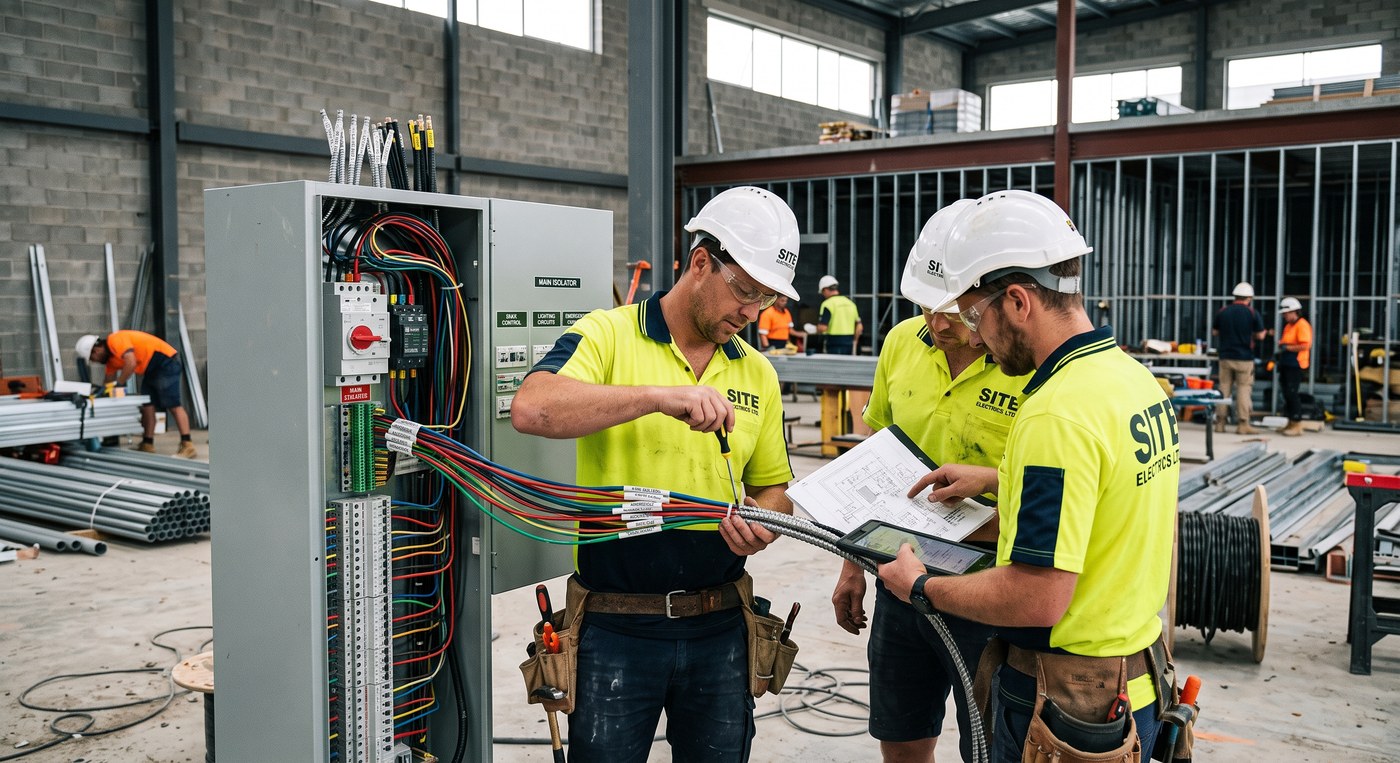
Yes. Reg. 16(1) of the Electrical Installations Regulations (S.L. 545.24) says that installations, including the earthing system, shall be periodically inspected and tested by an authorised provider or a warranted electrical engineer — and that the owner must make sure this happens.
What the regulation does not do is tell you how often. Reg. 16(2) hands that decision to the person doing the work: the authorised provider recommends the test frequency to the owner. There is no five-year rule in Maltese law, no national register of expiry dates, and nothing that falls due on a calendar.
So the honest formulation is: the duty is real and continuous, the deadline is an opinion.
What this is not
British arrivals tend to read "periodic inspection" as "EICR", and then look for the Maltese body that issues them. That mapping does not survive contact with the law here.
The regulation names two categories of person: an authorised provider or a warranted electrical engineer. It does not reference any UK competent-person scheme, and nothing in Maltese law makes an NICEIC or NAPIT registration relevant to whether your installation has been lawfully tested. If you are hiring, the question to ask is whether the person is authorised to work on installations in Malta — not which UK scheme they trained under.
The second mismatch is bigger. Malta legislated Energy Performance Certificates, but as a June 2022 column by Anthony Zarb Dimech in The Malta Independent set out, Malta has no legislation certifying the electrical safety of households. There is no document you are handed at a sale, no certificate stapled to the promise of sale, no rating on a scale. An inspection in Malta produces a report from your electrician to you. It does not produce a nationally recognised safety certificate, because that instrument does not exist.
The one point where the check is forced
There is exactly one moment in the sources where an inspection stops being a recommendation and becomes a condition of getting your lights back on.
Enemalta's tariffs and billing page states that if an account stays suspended for over six months, then once the dues are settled the customer must provide technical certification of the internal installation by a licensed electrician or warranted engineer, at the customer's expense, before supply is restored.
This matters more in Malta than it would elsewhere, because of how property moves here. A shell-form apartment that sat unfinished through an inheritance dispute, a Gozo farmhouse left closed after a death in the family, a block where the developer walked away — all of these routinely cross the six-month line. The buyer discovers it not at the notary but at the point where they want power and find that the account cannot simply be reopened. Budget for a certification visit before you budget for the kitchen.
What a good inspection actually covers
Enemalta's consumer-facing safety guidance sets out what every grid-connected property needs:
- a double-pole main circuit breaker
- an overvoltage protective device
- a residual current device (RCD)
- a reliable earthing system
and it states that the installation must be inspected regularly by an authorised electrician or electrical engineer. Reg. 16(1) singles out the earthing system by name as part of what is to be inspected and tested, which is a reasonable signal of where failures are expected to be found.
Two of those four items catch British owners out. The overvoltage protective device is listed here as a baseline expectation for a grid-connected property, not an optional extra bolted on during a rewire. And earthing is the item that most often cannot be assessed from the consumer unit alone — it is a test, not a look.
The paperwork you should be left with
Reg. 14 is the part to quote back at anyone who does the work and leaves you nothing. After testing, the owner is to be given:
- the form required by the regulation
- a schematic of the installation
- a wiring layout
The schematic and layout are the valuable half. In a Maltese apartment where circuits were run during shell-form completion by whoever the previous owner found, and where later alterations were made without records, a current layout is the difference between a half-day fault trace and a two-hour one. It is also the document you hand the next inspector, so the second inspection costs less than the first. Ask for it in writing before the work starts, not after the invoice.
If your inspection produced a verbal "it's fine" and no documents, reg. 14 has not been satisfied.
Condominiums, shell form and Gozo
Three local realities sit on top of the legal position.
In an apartment block, anything the inspection recommends that touches common parts — risers, the meter position, shared earthing arrangements — runs into condominium rules before it runs into an electrician's diary. Remedial work inside your own demise is yours; work beyond it is not unilaterally yours to commission.
Shell form means most Maltese dwellings were finished by their first owner's chosen contractor rather than by the developer, so two identical flats on the same landing can have entirely different circuit counts, cable routes and earthing quality. There is no block-level answer to "is this building's wiring sound".
And in Gozo, every part a remedial job needs crosses on the ferry. An inspection that finds three faults is cheaper to resolve if the parts are ordered once, which argues for a full report before any repair work starts rather than fixing as you go.
What it costs
No Maltese fee for an inspection report is published anywhere, including on our own rate card. The item "Inspection & completion certificate" is listed with no price band and is priced per report, quoted on site. That is not evasion — the scope of an inspection depends on circuit count and on how much of the installation is accessible, and in a Maltese property neither is knowable from the address.
As a labelled sanity check only, here is what a UK EICR is quoted at. These are UK figures, in sterling, and they do not apply in Malta — they are here so you have some idea of the order of magnitude rather than none.
| Property (UK) | Price |
|---|---|
| 1-bed, up to 6 circuits | £150 + VAT |
| 2-bed | £180 |
| 3-bed | £210 |
| 4-bed | £250 |
The same UK source notes that landlords there typically arrange one every five years, while for homeowners it depends on condition and use. The second half of that travels; the five-year figure does not, because no Maltese instrument imposes it.
What to do with this
If you own property in Malta, the duty under reg. 16(1) is already yours and does not wait for a trigger. The practical approach is to have the installation inspected and tested once, get the reg. 14 form, schematic and wiring layout into a file, and ask the provider for their recommended interval in writing — since under reg. 16(2) that recommendation is the only interval that exists. If you are buying, ask whether the supply account has been suspended, and for how long. Six months is the number that costs you money.
Common questions
- Is a periodic electrical inspection a legal requirement in Malta?
- Yes. Reg. 16(1) of S.L. 545.24 says installations, including the earthing system, shall be periodically inspected and tested by an authorised provider or a warranted electrical engineer, and that the owner must make sure this is done. What the law does not do is set an interval.
- How often must a Maltese property be inspected?
- The law does not say. Under reg. 16(2) the authorised provider recommends the test frequency to the owner, so the interval comes from your electrician's assessment of the installation, not from a statutory number.
- Is there a Maltese equivalent of the UK EICR or of the EPC for electrical safety?
- No. Malta legislated Energy Performance Certificates but, as reported by The Malta Independent in June 2022, has no legislation certifying the electrical safety of households. The paperwork you get is what reg. 14 requires after testing: a form, plus a schematic and wiring layout, handed to the owner.
- When is an inspection actually forced on me?
- If an Enemalta account stays suspended for more than six months, then once the dues are settled the customer must provide technical certification of the internal installation by a licensed electrician or warranted engineer, at the customer's expense, before supply is restored.
- What does an inspection cost in Malta?
- No Maltese fee is published. On the Electrician.mt rate card, 'Inspection & completion certificate' carries no band and is priced per report, quoted on site after seeing the installation.
What we could not establish
- S.L. 545.24 fixes no inspection interval and the sources give no recommended default for Maltese dwellings — the number comes from the inspecting provider.
- No Maltese inspection or report fee is published by any source used here, including Electrician.mt's own rate card, which lists the item with no band.
- The sources do not set out a prescribed national template, scoring system or pass/fail wording for a Maltese inspection report beyond the reg. 14 items.
- The sources state no penalty for an owner who never has the installation inspected, and no enforcement mechanism.
- There is no separate landlord duty, tenancy-linked interval or sale-and-transfer inspection requirement in any source used here.
- How long the technical certification required after a six-month suspension remains valid, and what it must contain, is not stated.
- The sources do not describe how authorised providers are listed or verified, nor whether Gozo is handled any differently.
Sources
- S.L. 545.24 Electrical Installations Regulations — Laws of Malta · read 2026-10-05
- Electricity safety regulations — Enemalta plc · read 2026-10-05
- Tariffs, billing and payments — Enemalta plc · read 2026-10-05
- Electricity and water - Part 1 — The Malta Independent · read 2026-10-05
- Electrician.mt rate card — Electrician.mt (first-party) · read 2026-10-05
- EICR Cost UK 2026 — TNS Solutions (UK) · read 2026-10-05
Drafted with Claude — claude-opus-5, then read, corrected and approved by Neil Bennett before publication. We do not publish anything a person has not read.
Want this costed properly?
The calculator gives you a figure in a minute. A site visit gives you a fixed price.
Book a free survey